Coordinate → Vector → Matrix → Tensor
People keep saying tensor in ML meetings.
It sounds heavy. In NumPy and PyTorch, it is simpler.
A tensor is just stacking.
One number. Then a list. Then a table. Then a stack of tables.
flowchart LR
  A[One number] --> B[A list]
  B --> C[A table]
  C --> D[A stack of tables]
That is the whole idea. The rest of this post walks through it with a map, a few score lists, and a batch of photos.
One number on a map
You have a map.
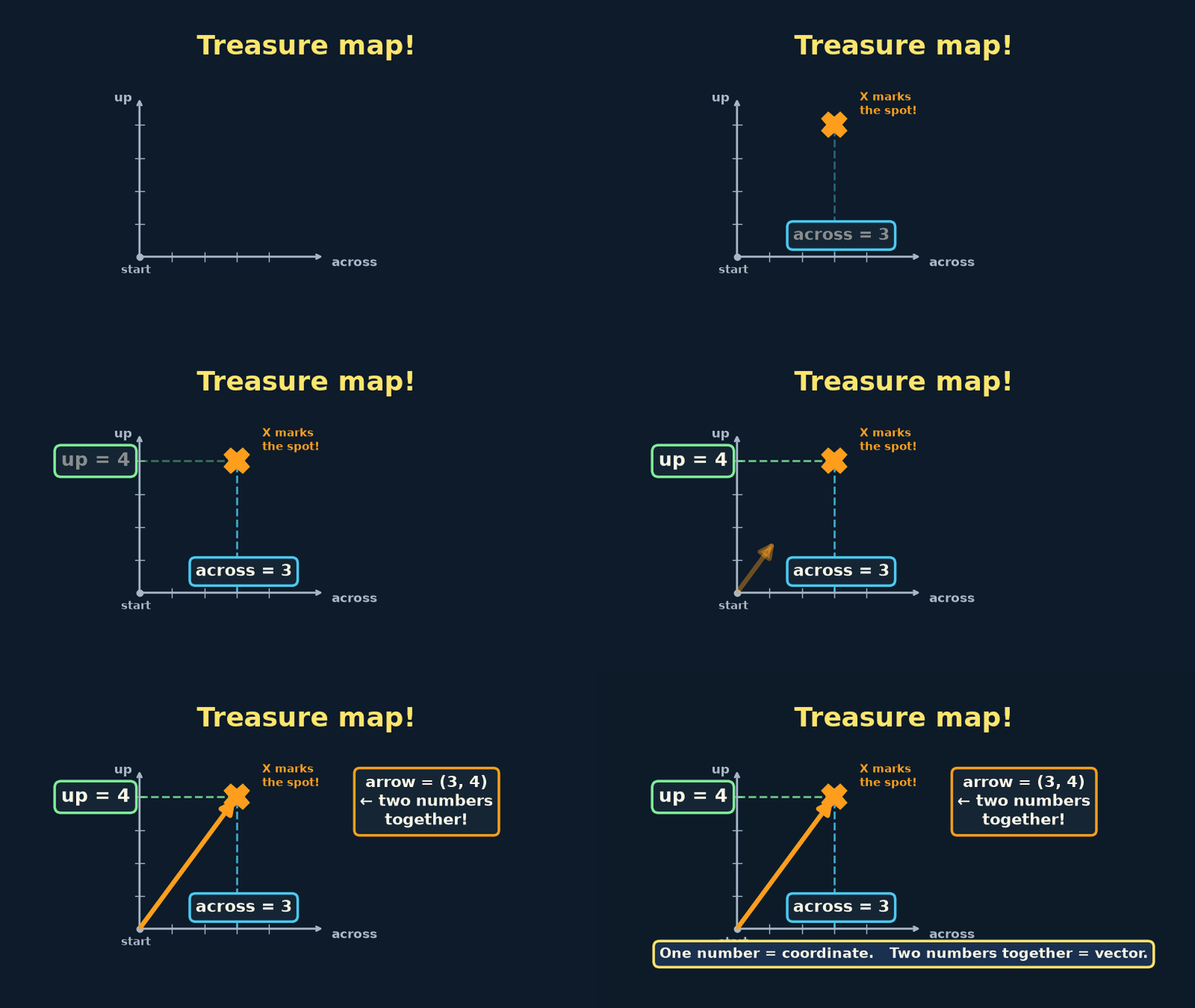
It says: walk 3 steps across.
That 3 is a coordinate.
A coordinate is one number on one axis. How far across. Or how far up. Not both.
It is not the whole trip. It is not an arrow. It is one value.
In short: across = 3. That is a coordinate. When it is just a single value, people also call it a scalar.
Two numbers make an arrow
The map is not done.
It also says: walk 4 steps up.
Now you have two values:
- across = 3
- up = 4
Put them in one short list: (3, 4).
That list is a vector.
A vector is an arrow. It says “go this way, this far.” Two numbers. Still one arrow.
The arrow is three across and four up.
One number? Coordinate.
Two numbers together? Vector.
A vector can have more numbers too. (3, 4, 5) is still one arrow — across, up, and a third axis. It is still one list. Not a table.
Think of values in a row. Two values. Or three. Still one row.
A short list is not a table
Here is the mix-up I still see in reviews.
(3, 4) has two numbers. People call that a “2D vector” because the map has two directions.
That does not make it a table.
A table has rows and columns. Many lists, side by side or stacked.
A 2D vector is still one short list. One row.
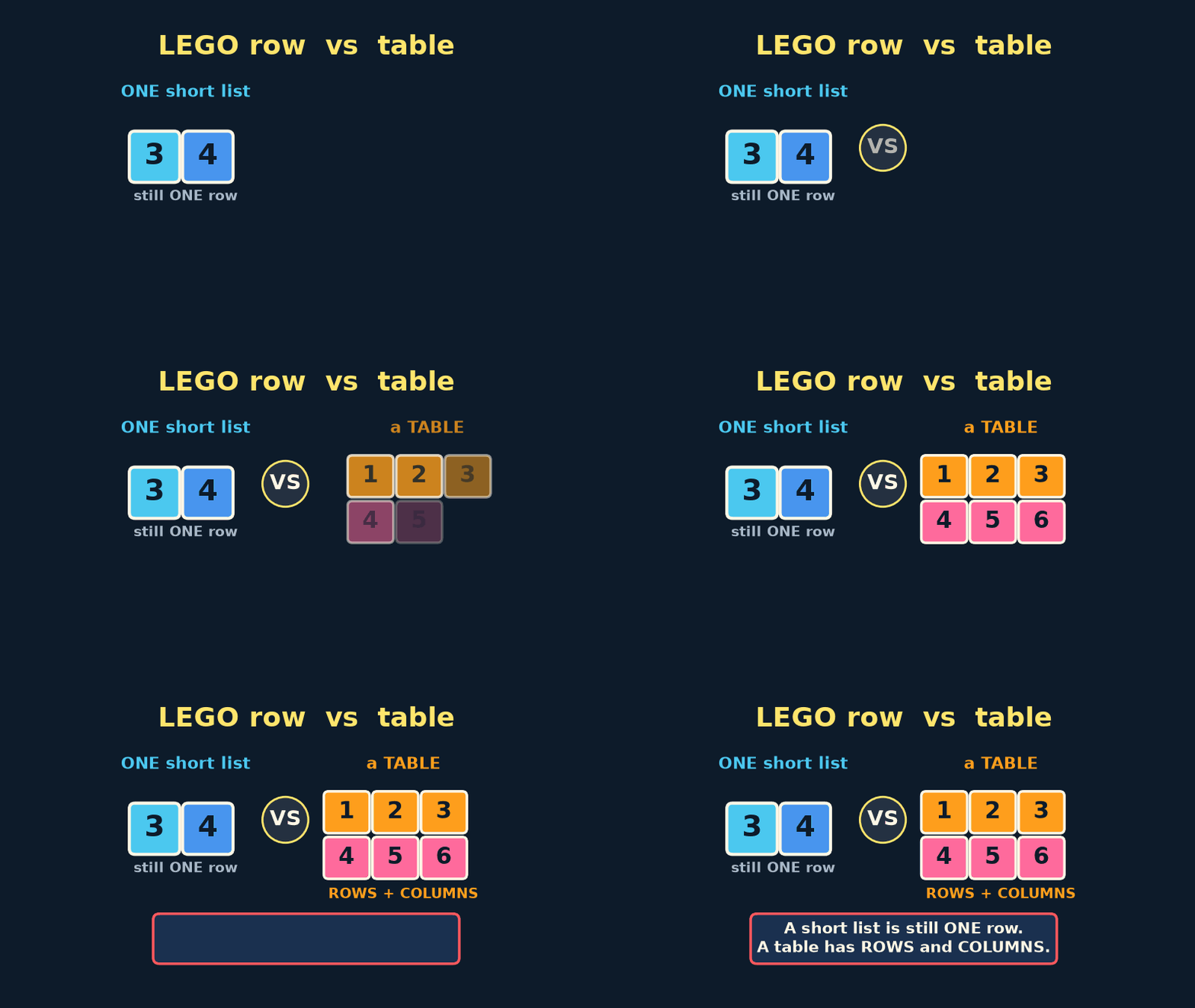
Two numbers in a row is still one list. A table is lots of rows.
If you only have Alex’s two scores, you have a vector.
If you have Alex and Sam and Jo, now you can make a table.
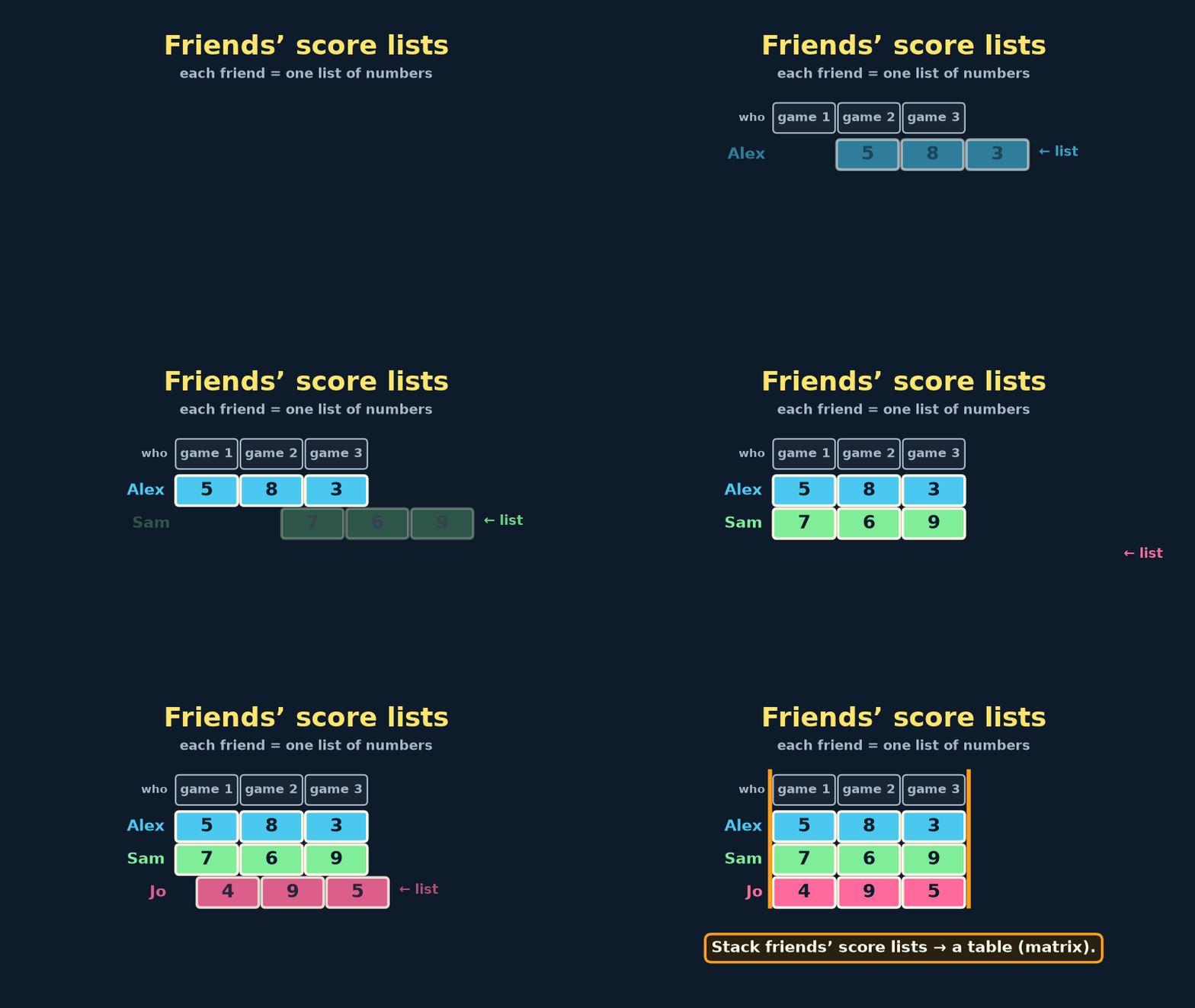
Stack the lists. Now you have a table.
Monday scores:
Alex: 3, 4
Sam: 1, 0
Jo: 5, 2
Each person has one list. Slide those lists together. You get a score table.
That table is a matrix.
A matrix is a rectangle of numbers. Rows and columns.
| Person | Game 1 | Game 2 |
|---|---|---|
| Alex | 3 | 4 |
| Sam | 1 | 0 |
| Jo | 5 | 2 |
Three lists stacked. That is all.
flowchart TB
  A["Alex: 3, 4"] --> T[Score table]
  S["Sam: 1, 0"] --> T
  J["Jo: 5, 2"] --> T
A grayscale image is a table too. Each cell is how dark that pixel is. Still rows and columns. Still a matrix.
Swap the rows and columns and you have a different table. Same numbers. Different meaning. Like swapping first name and last name on a roster.
Stack the tables. Now you have a batch.
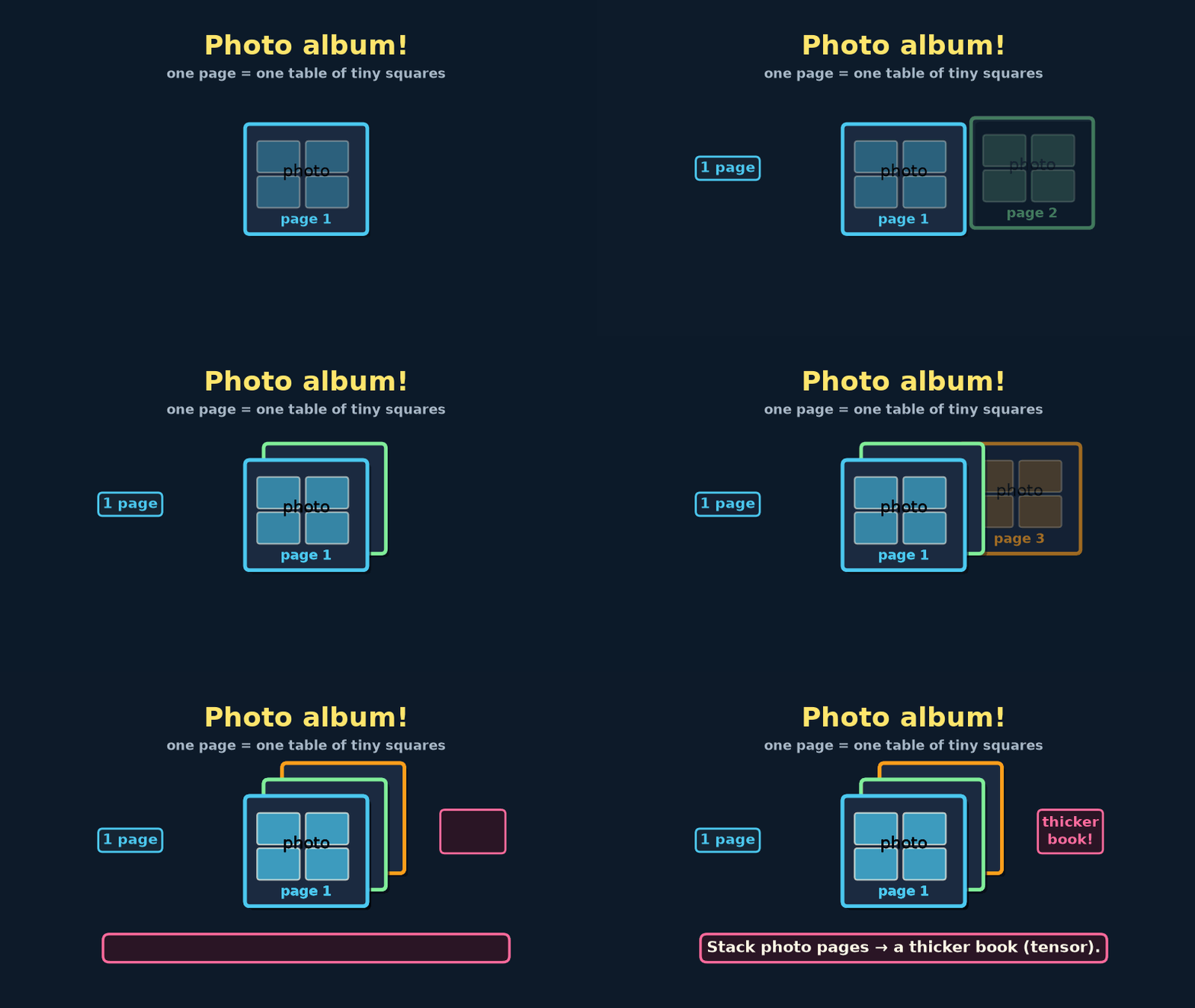
One photo is a table of tiny colour cells.
A photo set has many pages.
Stack the pages. The pile gets thicker.
That thicker pile is a tensor.
A tensor is “keep stacking.” A list of tables. Or a stack of stacks.
flowchart TB
  P1[Page 1] --> B[Thicker stack]
  P2[Page 2] --> B
  P3[Page 3] --> B
Same idea in a training loop:
| Everyday picture | What you stacked | Name |
|---|---|---|
| One clue on the map | one number | coordinate |
| One arrow | one list | vector |
| Score sheet | lists stacked | matrix |
| Photo batch | tables stacked | tensor |
A computer does the same thing with a batch of photos. One photo is a page. Many photos is the stack. That stack is a tensor.
If each photo also has three colour layers (red, green, blue), you add another axis. Still stacking. Still a tensor.
How to read the size
Computers write the size as a shape.
Shape means: how long is each axis?
| What you have | Shape |
|---|---|
| Across = 3 | one number |
Arrow (3, 4) |
a list of 2 |
| Three people, two games | 3 rows, 2 columns |
| Four photos, each 2 by 2 | 4 pages, each a small table |
The same pile of numbers can sit in different shapes.
(3, 4) is one arrow.
A tiny table with one row — 1 by 2 — can hold the same two numbers.
They are not the same job. One is an arrow. One is a one-row table.
Before you argue about the model, look at the shape. Count the axes. Name them: number, list, table, stack.
Names you will see in code
You do not need this to get the idea. It is here so the library docs make sense later.
| Plain name | Usual name | Computer shape | ML example |
|---|---|---|---|
| One number | coordinate (a scalar) | () |
a single score, like a loss |
| One list | vector | (2,) or (768,) |
a map arrow, or a word turned into 768 numbers |
| A table | matrix | (3, 2) |
scores, or one gray photo |
| A stack of tables | tensor | (4, 2, 2) or (8, 3, 224, 224) |
a photo batch; a batch of colour pictures |
In school maths, “tensor” can mean extra rules. In the computer (PyTorch, NumPy), tensor just means a stack of numbers with a shape.
A 2D vector is still a list. Do not call it a table.
Short recap
Start with one number. Make a list. Stack lists into a table. Stack tables into a batch.
If this helped:

Discussion
Reactions and replies via GitHub Discussions. Sign in with GitHub to comment.