KV Cache: Why Chatbots Keep Past Keys and Values
A chatbot answers one token at a time.
You type a long question. It starts typing back. Token. Token. Token.
The model should not recompute your whole chat from scratch for every new token.
That would mean redoing every old attention step just to add one new token.
The fix is a cache of past Keys and Values. That store is the KV cache.
flowchart LR
  A[Read the prompt once] --> B[Fill the KV cache]
  B --> C[Append new K and V]
  C --> D[Query against cached K]
  D --> C
That is the whole idea. The rest of this post is Q, K, V, a growing cache, and why memory gets tight.
Three vectors per token
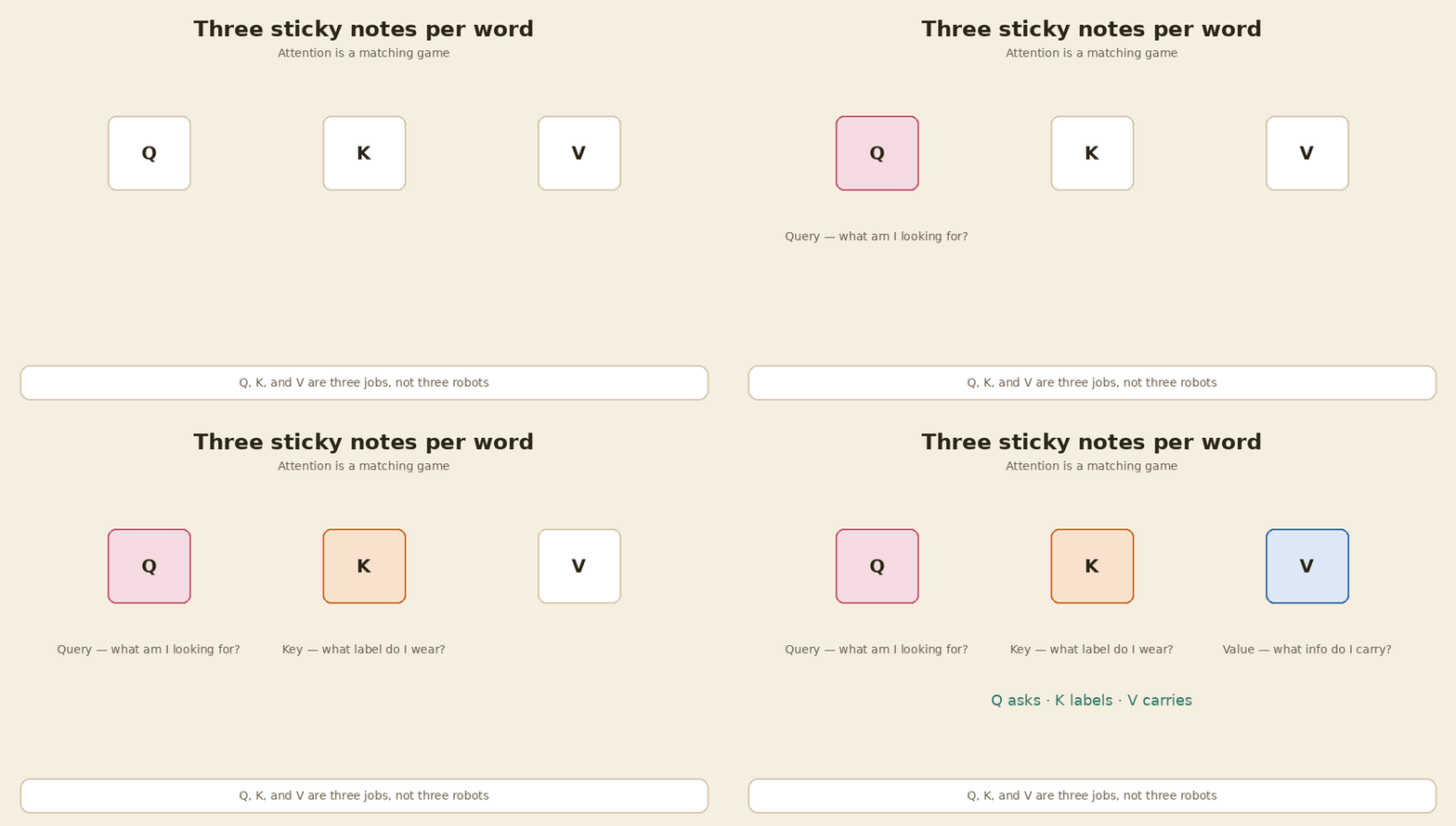
Inside a transformer, each token gets three vectors:
| Vector | Name | Job |
|---|---|---|
| Q | Query | What am I looking for? |
| K | Key | What label do I wear? |
| V | Value | What info do I carry? |
Attention is a matching step:
- The new token’s Q looks at every earlier token’s K.
- Good matches get higher scores.
- Those scores mix the matching tokens’ V vectors into one result for “what should I say next?”
Q asks. K labels. V carries.
Two phases: prefill, then decode
Generation has two phases.
Prefill — fill the cache
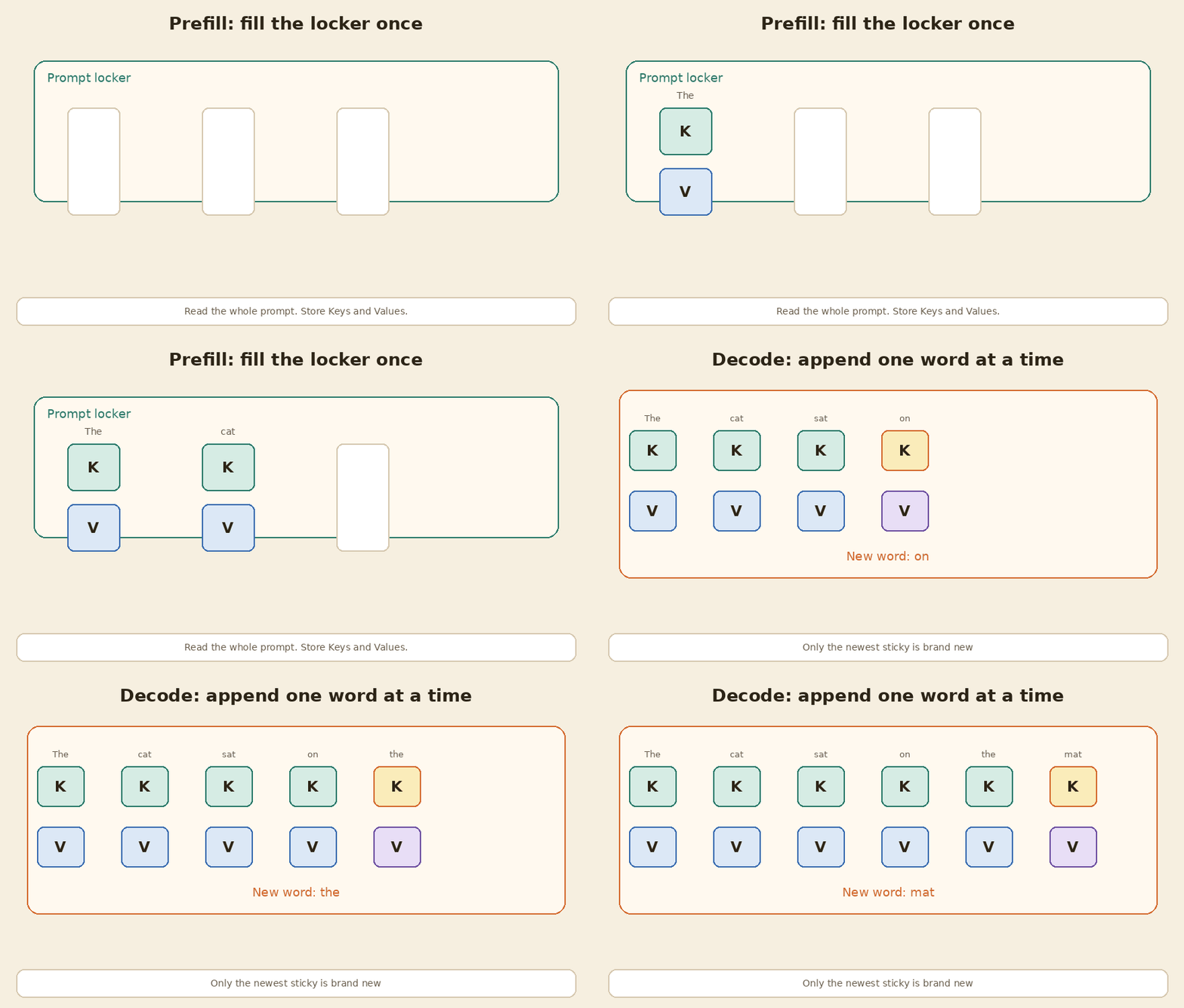
The model reads your whole prompt once.
For every prompt token it makes K and V vectors and stores them.
Then it predicts the first output token.
Prefill is usually the big “wait before the first token shows up” (time to first token).
Decode — one token at a time
For each new output token:
- Make q, k, v for only that new token.
- Put the new k and v into the cache.
- Use the new q against all cached keys.
- Mix the cached values.
- Pick the next token.
- Repeat.
Those past vectors sit in fast GPU memory (VRAM). Decode uses them like this:
flowchart LR
  A[Stored] --> B[Fetched]
  B --> C[Used]
- Stored — old K and V sit in the cache.
- Fetched — pull them out of VRAM.
- Used — the new Q asks them.
Why keep K and V, but not old Q?
This is the interview question.
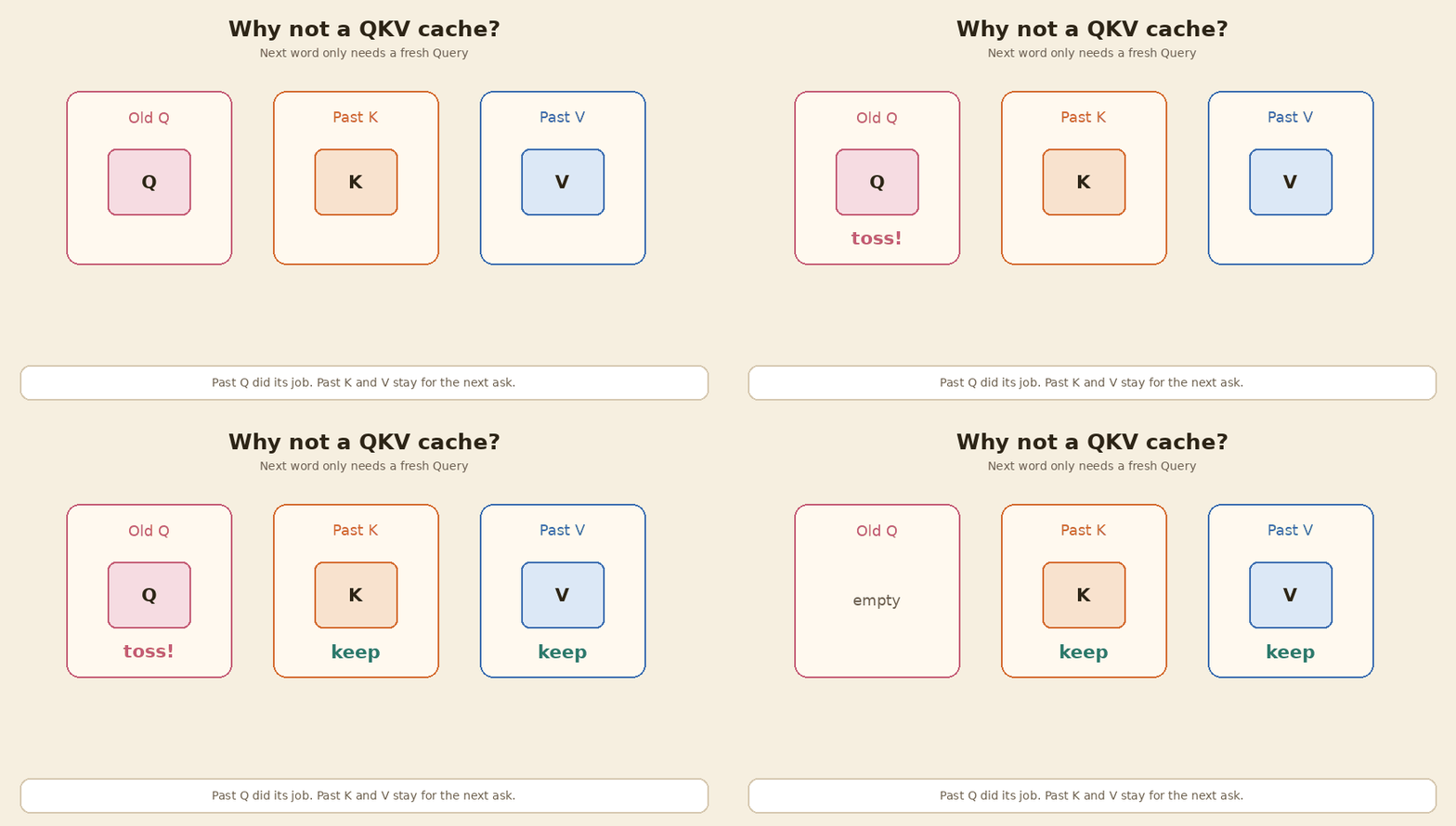
To pick the next token, the model only needs a fresh Q for the newest token.
It still needs every past K and V, because the new Q must match against the whole history.
Old Q vectors already did their job when those older tokens were predicted. They are not needed again for this next token.
Past K and V for a finished position do not change. So recomputing them every step would be wasteful.
flowchart TB
  A[New token arrives] --> B[Make fresh Q, K, V]
  B --> C[Drop old Q]
  B --> D[Keep all past K and V]
  D --> E[New Q asks the full cache]
  E --> F[Next token]
We cache Keys and Values. Not a QKV cache.
Without the cache (the slow story)
Imagine the prompt:
The cat sat
Without a cache, when the model adds on, it might redo K and V for:
The · cat · sat · on
Then for the:
The · cat · sat · on · the
…and so on. The sequence grows. The redo grows. Wasteful.
More tokens means more work. Without the cache, each new token remakes every old K and V — twice the chat is way more than twice the redo.
With a cache:
- Prefill already stored K/V for
The cat sat. - For
on, only make new k/v foronand append. - Query the cache. Done.
| Path | Cost |
|---|---|
| RECOMPUTE | Remake every old K and V. Lots of redo. |
| CACHE | Keep old K and V. Pay GPU memory (VRAM) instead. |
Cache trades GPU memory for less recompute. It is not free, and it is not magic zero-work.
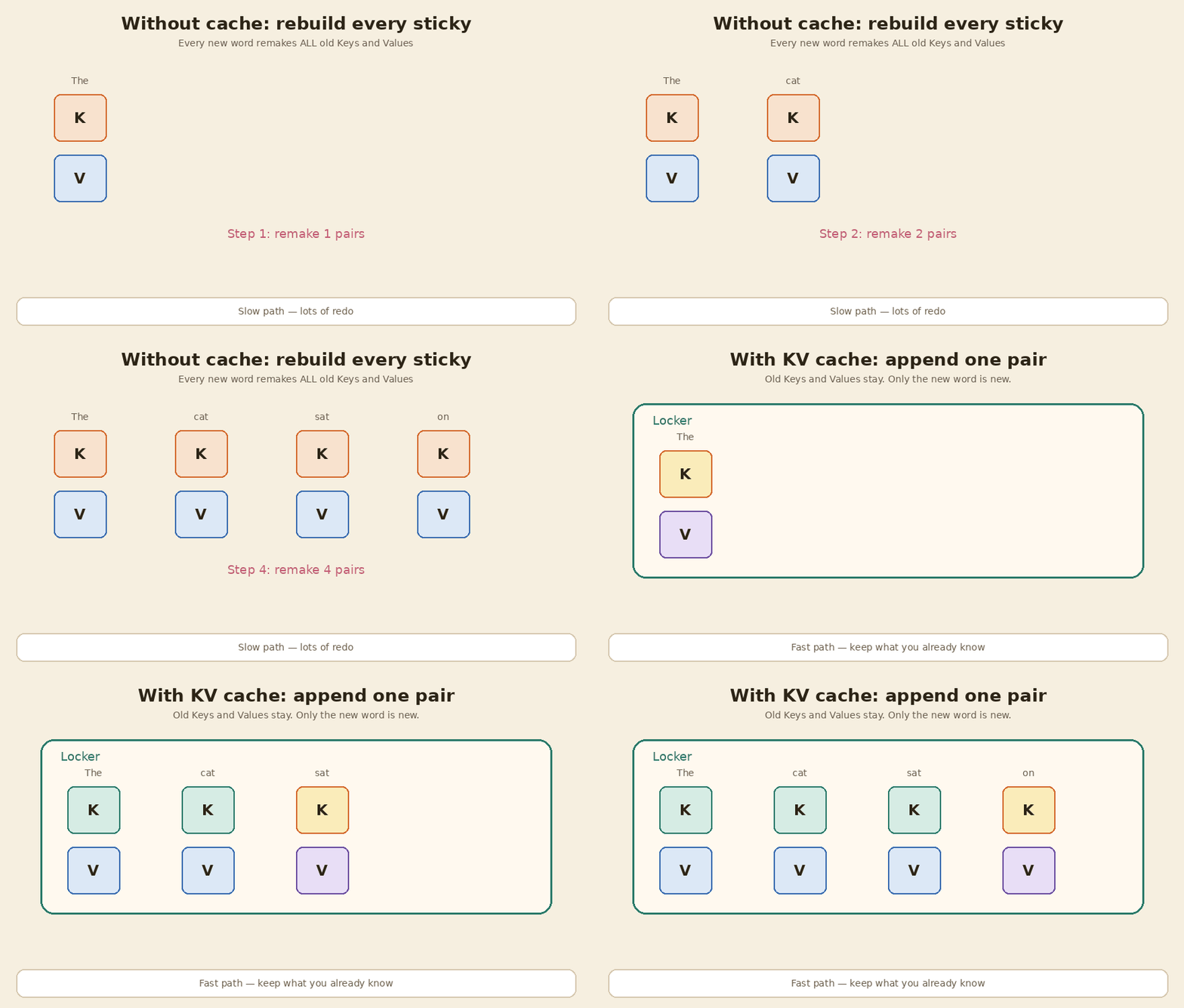
That is why streaming chat feels possible. Decode still has to read the growing cache, but it does not rebuild every old K and V from scratch.
The tradeoff: the cache eats space
The cache lives in fast GPU memory (VRAM / HBM) while the answer is being written.
It grows with:
- how many tokens so far (prompt + answer)
- how many transformer layers (each layer has its own cache)
- how many KV heads
- how many bytes per number (FP16, FP8, …)
- how many chats share the same GPU at once
Rough shape:
tokens × layers × 2 (K + V) × size-of-each-vector × bytes
Long context is often a memory problem before it is a math problem.
During decode, each new token often means reading the whole cache again. That is why long chats can get slower even when the “thinking” per new token looks small: the bottleneck is moving K and V, not inventing them.
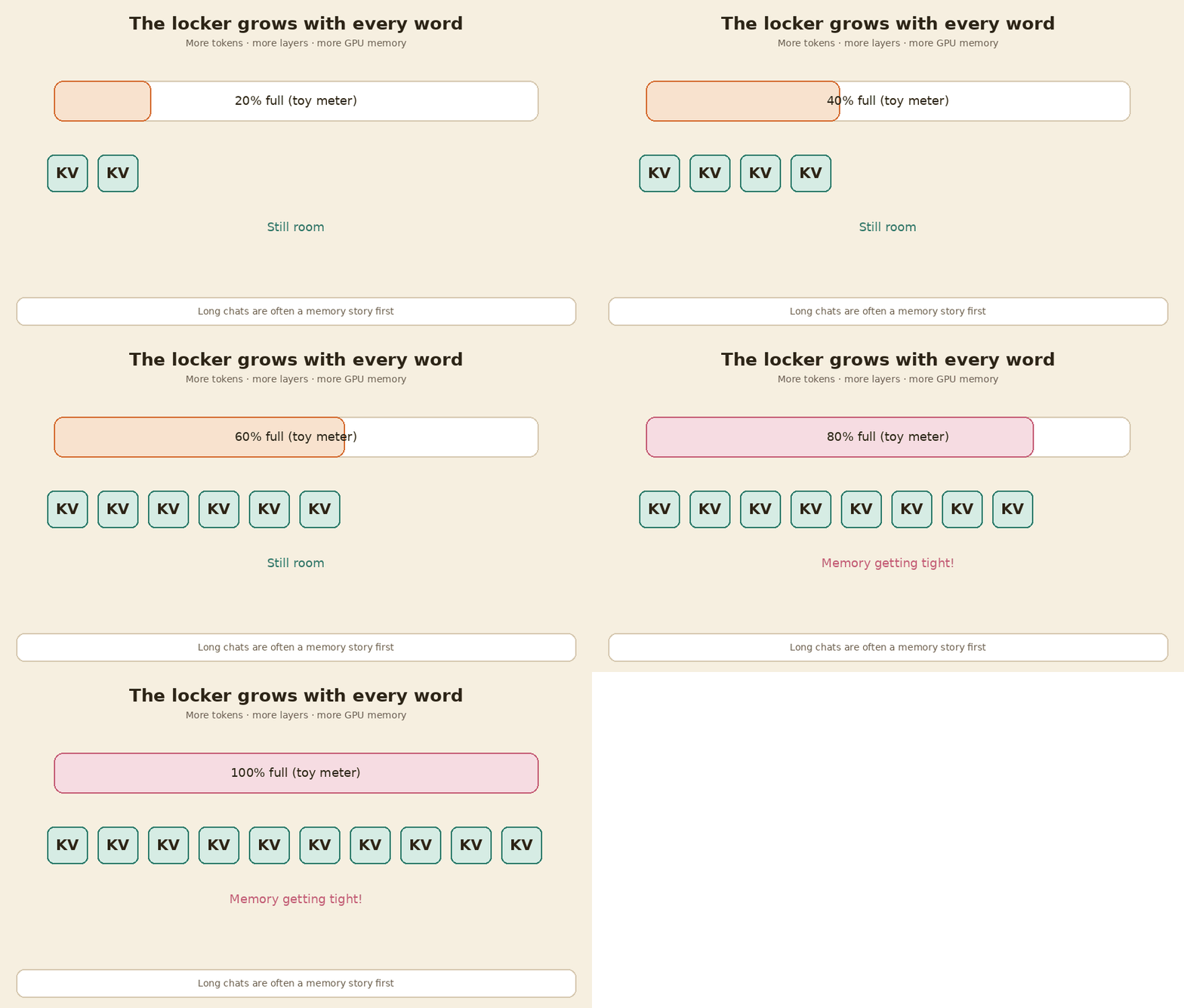
Example sizes you will see in articles (not our stopwatch): for a big model at tens of thousands of tokens, the KV cache alone can be many gigabytes per chat. Batch many chats and the cache can rival the model weights.
We did not measure those figures on Intelliwise hardware. Treat them as teaching examples from public write-ups.
How people shrink the cache
| Idea | Name | What it does |
|---|---|---|
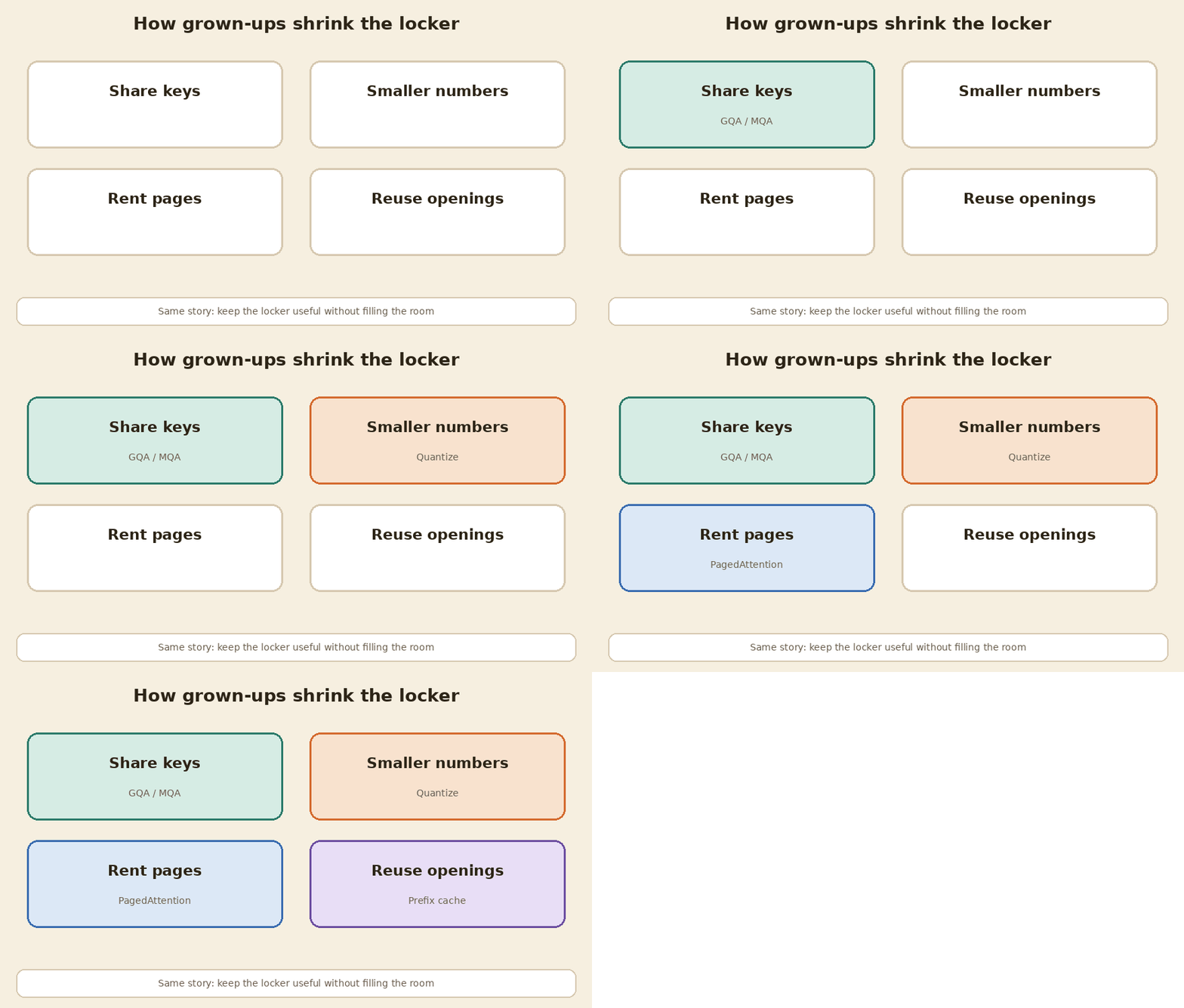
| Many query heads share one key | MQA / GQA | Fewer KV heads → smaller cache (GQA is common in modern open models) |
| Store smaller numbers | KV quantization | FP8 / INT8 / INT4 cut bytes; tiny quality risk if done well |
| Allocate cache pages only when needed | PagedAttention (e.g. vLLM) | Like OS virtual memory — less wasted empty space |
| Same opening tokens for many users | Prefix caching | Reuse the cache for a shared system prompt / RAG prefix |
| Spill cold pages to cheaper memory | Offloading | Keep hot K/V on GPU; park cold ones on CPU / disk |
flowchart LR
  A[Big cache] --> B[Share KV heads]
  A --> C[Smaller numbers]
  A --> D[Paged pages]
  A --> E[Reuse prefixes]
A tiny toy walkthrough
Toy only. No real customer data.
Prompt tokens:
["The", "cat", "sat"]
Prefill
- Compute K and V for all three.
- Store them in the cache.
- Predict first output, say
on.
Decode step for on
q_on, k_on, v_on = project("on")
K = concat(K_cache, k_on)
V = concat(V_cache, v_on)
scores = q_on · K
mix = softmax(scores) · V
next_token = pick_from(mix)
Then append again for the next token. Same dance until the answer ends.
When the reply is finished, that chat’s cache can be freed. It is request memory, not a forever database.
Honest caveats
- KV cache is an inference trick. Training has a different story.
- Caching K/V does not remove attention over history. It removes recomputing old K/V.
- Longer context still costs more memory and more cache reads.
- Prefix cache hits need exact matching token prefixes. One space change can miss.
- Example GB figures in articles depend on model size, GQA, precision, and length. Do not treat them as a promise for your laptop.
Terms used in this post
| Term | Meaning |
|---|---|
| token | Word piece the model reads or writes |
| query (Q) | “What am I looking for?” |
| key (K) | “What label do I wear?” |
| value (V) | “What info do I carry?” |
| KV cache | Stored past K and V |
| VRAM / HBM | Fast GPU memory |
| prefill | Read the prompt once and fill the cache |
| decode | Emit one output token at a time |
| TTFT | Time to first token |
| ITL | Inter-token latency — gap between tokens |
| MQA / GQA | Share KV across query heads |
| PagedAttention | Allocate cache pages on demand |
| prefix caching | Reuse a shared prompt prefix |
Sources and further reading
Public explainers we used while writing (mechanics, not our measurements):
- KV Cache Explained (Learn Code Camp)
- KV cache and context memory costs (Wes Kennedy)
- KV cache concept note (ZeroEntropy)
In short
A chatbot answers one token at a time. It keeps past Keys and Values in a cache so it does not rebuild every old K and V for every new token. Fresh Queries still ask the whole cache. That makes streaming fast — and makes long chats hungry for GPU memory.
If this helped:

Discussion
Reactions and replies via GitHub Discussions. Sign in with GitHub to comment.